March 19, 2026
Why Southlake and Colleyville Homes Need Roof Soft Washing Every 1–2 Years
Article
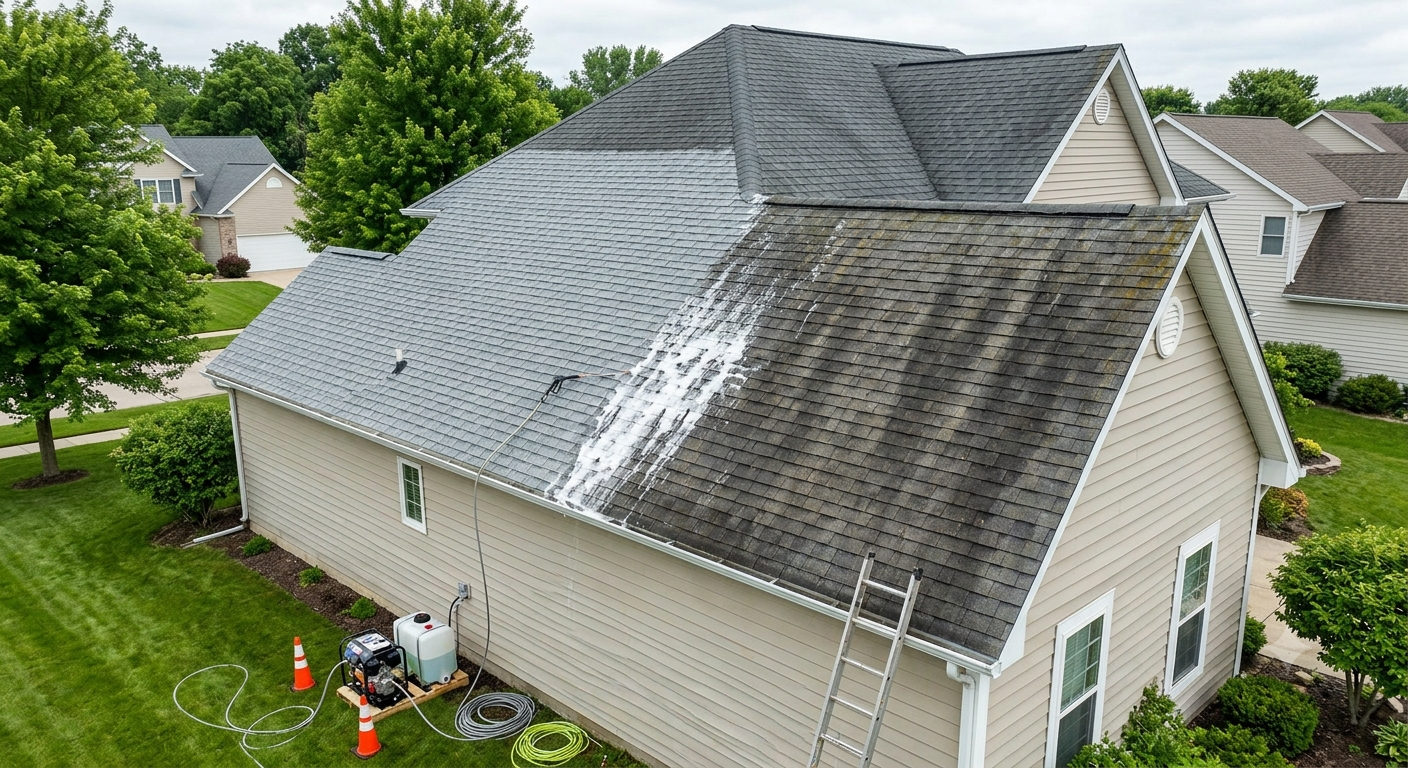
If you drive through Southlake or Colleyville, you’ll notice something in common on many rooflines: dark streaking running down composite shingles, especially on north-facing slopes or sections shaded by mature trees. It’s easy to write off as “just how roofs look after a while,” but that streaking is a living organism — and it’s quietly working against two of the highest-value housing markets in Tarrant County.
The Culprit: Gloeocapsa Magma
The black and dark green streaking on North Texas roofs is caused by Gloeocapsa magma, a blue-green algae that feeds on the limestone filler used in most asphalt shingles. It thrives in humid, warm climates — exactly the conditions Southlake and Colleyville see for much of the year — and spreads via airborne spores from roof to roof, which is why entire neighborhoods often show the same staining pattern around the same time.
Why This Matters More in High-Value Neighborhoods
Southlake and Colleyville consistently rank among the highest median home values in Tarrant County, with many properties featuring premium architectural shingles, steep multi-level rooflines, and mature landscaping — all factors that both increase visibility of algae staining and accelerate its growth. A streaked roof is one of the fastest ways to make an otherwise immaculate, high-value property look neglected from the street, which matters whether you’re planning to sell or simply maintaining your home’s presentation in an HOA-governed community.
Beyond Appearance: The Real Cost of Waiting
Algae growth isn’t just cosmetic. As it spreads, it retains moisture against the shingle surface, which can accelerate granule loss and shorten your roof’s effective lifespan. Given that roof replacement is one of the most expensive home maintenance expenses homeowners face, a roof soft wash every 1–2 years is a low-cost way to protect a very high-cost asset.
Why the 1–2 Year Window
Algae spores are constantly present in the air in North Texas, so it’s not a matter of if they’ll land on your roof, but how quickly conditions let them establish and spread. Homes with:
- Steep, multi-facet rooflines (common in Southlake’s premium subdivisions)
- Heavy tree cover (common on Colleyville’s larger, wooded lots)
- North-facing slopes that stay shaded and damp longer
…tend to develop visible streaking within 12–18 months of their last cleaning, while homes with less shade and simpler rooflines may stretch closer to two years before streaking becomes noticeable. Either way, treating algae before it’s heavily established makes each cleaning faster, less intensive, and more effective at slowing regrowth.
The Soft Wash Standard
We only use roof-safe, low-pressure soft washing — never high-pressure equipment — on shingle roofs. This approach is endorsed by major shingle manufacturers and won’t void your roof’s warranty, unlike pressure washing, which can strip granules and cause long-term damage.
Protect one of your home’s most valuable — and most visible — assets. Visit our roof soft washing page to learn more, or call 469-236-0954 for a free roof assessment.
FAQ: Roof Soft Washing in Southlake and Colleyville
How often should I soft wash my roof in North Texas?
Most homes in Southlake and Colleyville benefit from roof soft washing every 1-2 years, depending on shade, tree cover, and roof slope orientation.
Is roof algae just cosmetic?
No. Algae can trap moisture on shingle surfaces, which may accelerate wear over time in addition to hurting curb appeal.
Will pressure washing damage asphalt shingles?
It can. High pressure may strip protective granules and increase the risk of water intrusion. Roof soft washing is the safer standard for shingle systems.
Does roof soft washing help with home value perception?
Yes. A clean roof has an outsized impact on curb appeal, especially in high-value neighborhoods where exterior presentation is closely noticed.
What time of year is best for roof cleaning?
Spring and fall are common windows, but any season can work when conditions are safe and dry enough for proper treatment and rinse.